
Despair is Not a Work Plan: On the Power of Words
In times of uncertainty and conflict, the most common question I encounter is, "How can I be strong?" You want to be strong for yourself, but primarily for those who lean on you. You wonder if you are projecting resilience or if the anxiety and stress are leaking out despite your efforts to hide them. Sometimes it feels as though honesty and authenticity require us to "talk about it," yet in the midst of the current situation, excessive talk about emotions can create overwhelm rather than relief. You find yourself in a bind: is silence a form of strength, or is it merely a mask that grows heavier by the day?
I want to offer a different perspective on the concept of "strength." Strength is not necessarily the absence of fear, but rather the ability to create a separation between the storm outside and our internal space. The most practical way to do this—both a clinical and everyday tool—is through the conscious choice of the words we use.
Words carry far more weight than we realize. They are not just tools for conveying information; they are the instruments through which we shape our internal reality. Language is not merely a reflection of what is happening inside; it is an active participant in creating the experience itself. When we choose to use moderate language—for example, saying "it’s not easy" instead of "it’s hard," or "a challenging time" instead of "difficult"—we are performing an active deed of regulation. The words we choose are the raw materials of the soul. If we use harsh and extreme words, we build a rigid and fragile internal structure. If we choose words like "okay" or "challenged," we create breathing room—a small crack that allows air in, even in challenging situations.
"But what if I don't feel that way?" you might ask. Here lies a professional secret: when we use softer words, we aren't "sugarcoating" reality. We are simply deciding what enters our home and what stays outside. This is an active act of self-preservation, a defense against emotional flooding. In this way, you lay the foundation for building resilience. Over time, these words sink in; you begin to absorb the softer tone, and the psyche responds accordingly. It is a process of slow absorption, where language reshapes your sense of stability.
This is evident in everyday life. I once met someone returning from a morning swim to her spacious, elegant home. When I asked how she was, she replied with a heavy sigh: "How can one live like this..." I wondered about her choice of words. Objectively, she had everything that allows for a moment of grace—recharging physical activity and a safe, elegant environment. Yet, her choice of words created a reality of weakness. Her words extinguished all the energy she had gained from her swim and invited a weakening of herself, and even of me. They closed the door on the possibility of feeling "fine" or even saying, "It was good to swim." This is the power of language. It can nullify existing resources in a single moment of inattention.
As women and as mothers, our responsibility for language becomes even more significant. Our words immediately affect the energy in the room. When you choose to tell your children that the situation is "not simple, but we will overcome," you aren't just calming them—you are creating a world for them where hope and movement exist. Children need a calm foundation to grow. If a mother signals that she is "fine," even if that "fine" is a result of conscious choice, she provides an anchor to lean on. This is not "faking it"; it is a parental role—but I believe it’s not just parental. Ultimately, we set a personal example for our students, our subordinates, and everyone around us.
Resilience is not a static state where nothing hurts us. Resilience is the ability to create a space that allows for movement and change even within a crisis. This space is built, word by word. When you say, "I have no strength left," you are closing a door on yourself. When you choose to say, "I am in a challenging period," you invite continuity. You are also building a thought; at first, the thought is thin and can easily escape among the crowd of other thoughts, but over time, words will help your thoughts become stronger and more positive, provided that is where you choose to aim. It is not something that happens on its own; it is something you can bring about. Like a muscle trained over time, the "thought muscle" can also be trained through the choice of words.
Two good friends of mine became very ill. The first, Vicky, a beautician by profession, said to me after telling me about her illness: "All my life I worked like a slave, and now that I’m retired, I got sick." Dear Vicky, I said/asked, didn’t you love your work? "True," she answered, "I loved it very much." You brought joy to many women, some of whom became your friends to this day, like me... "True," she agreed. So, not like a slave, would you agree?.. It is very frustrating and scary to be ill, but words matter too. Good thoughts about work and friendships—these are strengthening thoughts. It is important to fight despair and not let it take over your words.
My second friend, when we met and I asked how she was coping, replied: "Despair is not a work plan." A strong and impressive woman—not everyone has such resilience, but it is something to strive for.
Furthermore, a work plan is something you can create. My suggestion for such a plan is to choose the words you say, let them strengthen us, and turn toward hope rather than despair. Turn toward the goodwill and the coping strength within us, toward optimism and the glass half-full.
In the end, the power of language lies in its precision. Words are what maintain order in the world and in the soul. The choice of good and beneficial words is in your hands. Even if it is not self-evident, and even if it requires conscious effort every single time—it is a highly effective way to strengthen yourself and others. Not "the situation is very difficult," but "it's not simple, but we will overcome."
Words are incredibly important; they are the compass that can lead us back to ourselves, to quiet, and to resilience.
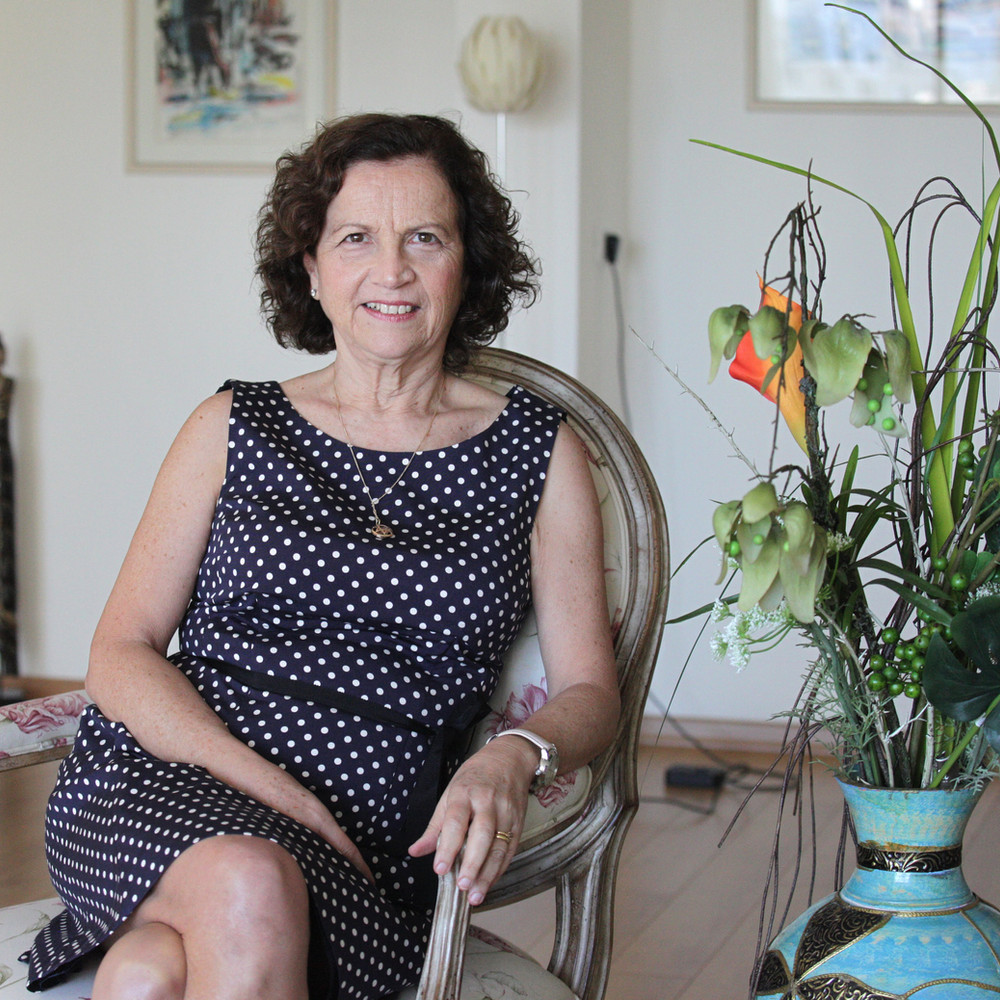
פסיכולוגית לנשים בתל אביב ובאונליין.
אם המילים האלה פגשו אותך במקום מוכר
אפשר לבדוק בכמה מילים בוואטסאפ אם טיפול איתי יכול להתאים לך.
כתבי לי בפרטיות