
She arrived at my clinic and said her name was Ayala.
Ayala is a delicate name. It always reminds me of a doe leaping between rocks, gentle and swift. But the real Ayala, the one who walked into my clinic, was a woman in her late 30s, pregnant, with short black hair. She was very feminine and, despite her pregnancy, quite slender.
"I'm not exactly sure why I'm here," she says. "I have so much on my plate right now—keeping too many balls in the air. Just a lot of everything . So many thoughts. I'm a bit confused, and I don't know where to begin. I mean, it's not just that I don't know where to begin talking with you—it's just that in life, I don't know where to start."
This entire sentence was uttered without a single comma or period, truly all in one breath.
"With me, you can start from the very beginning, or if you prefer, start from the middle," I tell her. "Wherever you choose to begin will be just fine. Perhaps you could just tell me a little bit about yourself."
"Well," she says, "as you can see, I'm pregnant. I'm in my fifth month, and I’m in complete panic. " She hesitates for a moment, falling silent. I look at her and wait.
"I've had a few unsuccessful pregnancies that ended in miscarriages. Two spontaneous miscarriages, and one termination because the pregnancy wasn't viable. We've been trying to become parents for several years now."
"That is a deeply challenging journey," I say to her. "It is not easy being a woman, and it is not easy trying to become a mother." She nods and replies, "You're right. It's not easy being a woman."
"And how are you feeling right now, with this pregnancy?" I ask. She answers that so far, everything has been fine. "But until I hold a baby in my arms," she adds, "I won't be able to feel secure. I won't be able to have peace of mind. I want to be a mother so badly."
After a brief silence, she continues: "But here's the thing—I've already been in therapy regarding the miscarriages, and I feel I'm coping reasonably well. I'm not sure if that's the main thing I want help with right now, or maybe it is... I'm not entirely sure."
Then, she opens up further: "During these years, I completed my degree, but now I want to make a career change. After this whole complex process that I went through—that we went through, my partner and I—I want to do something else. I want to move in a therapeutic direction and work with people. I want to help others cope with experiences similar to what we went through. But I'm not sure if it's a good idea, and I don't know if it's right to do it now. I don't know whether to go back to school or if I should pause. Then again, I'm almost 40, and I need to move forward with my life; I can't just put everything on hold. In short, I'm confused. I need help. So, that's pretty much what brought me to you."
"I've been listening to you very closely," I tell her. "Life is truly complex in general, and particularly so for women. There is a window of a decade or a decade and a half where you are expected to build a family, navigate pregnancies and children, and if that weren't enough, these are also the critical years for building a career. Everything converges into a relatively short span of time. A woman is expected to be everywhere and do everything—or do nothing at all, or stay home with the kids, or not stay home and develop a career. The demands are so confusing, and it's hard to know what to do. It's hard to tell which piece of advice or which part of this cultural discourse actually fits you —as a specific woman, in a specific life, with a specific partner. What, out of all this, can truly work for you?"
Sometimes, when working with women, I think about this role of mine—accompanying them through so many facets of life. Whether it is during their most complex, intimate, and personal moments, or whether it involves helping them navigate life choices. These choices are sometimes tied to relationships and starting a family, and other times to a profession, a specialization, or finding where and how to compromise. Balancing motherhood, marriage, and a professional career all at once.
In fact, it often seems that the women in my clinic are seeking and expecting a psychologist who can also be a mentor—someone to guide them through these crucial years of their lives so they can navigate them in the best possible way for themselves. Because ultimately, feeling good about yourself and your life depends heavily on the choices you make, the compromises you accept, and the life you build.
This is my place. To be there for the women in my clinic in whatever capacity they need, so that together, we can tackle every question—whether it is strictly psychological or less so. Questions about career, financial independence, and those fundamental dilemmas of life—like whether to leave a partner or to compromise for reasons only you will ever know. These questions encompass the entirety of life across a vast spectrum of issues. This is who I am for the women in my clinic. This is how I see my purpose, and I believe it is how they experience me too.
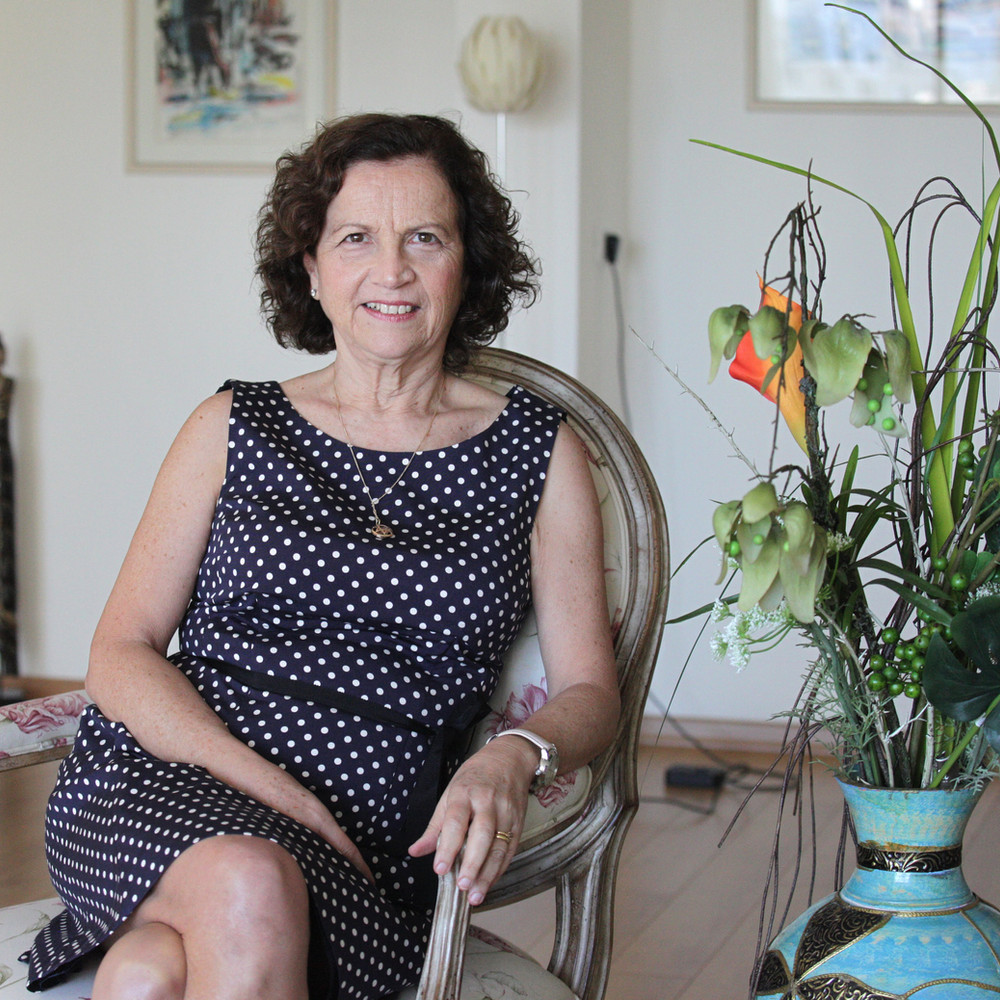
פסיכולוגית לנשים בתל אביב ובאונליין.
אם המילים האלה פגשו אותך במקום מוכר
אפשר לבדוק בכמה מילים בוואטסאפ אם טיפול איתי יכול להתאים לך.
כתבי לי בפרטיות